I am a researcher at the University of Zurich and hold a PhD in Political Economy from ETH Zurich (2025). My current focus is testing how to close the gap between legal eligibility and actual take-up of public services. I combine randomized field experiments with computational methods that analyze administrative records, and text at scale.
My work on take-up gaps has focused on naturalization and citizenship access. I combine causal inference methods with machine learning and natural language processing, and my recent work includes an AI-powered multilingual chatbot tested in a large-scale trial. The experiments I work on are run with city administrations and designed to produce evidence that policymakers can act on directly. More broadly, I am interested in social distance, group belonging, and how these shape policy outcomes and intergroup relations. My work bridges research and practice, generating evidence to inform policy while addressing fundamental questions about political inclusion, democratic deficit and belonging.
with Achim Ahrens, Selina Kurer, and Dominik Hangartner
Journal of Applied Econometrics, 2024
Abstract: Research underscores the role of naturalization in enhancing immigrants' socio-economic integration, yet application rates remain low. We estimate a policy rule for a letter-based information campaign encouraging newly eligible immigrants in Zurich, Switzerland, to naturalize. The policy rule assigns one out of three treatment letters to each individual, based on their observed characteristics. We field the policy rule to one-half of 1717 immigrants, while sending random treatment letters to the other half. Despite only moderate treatment effect heterogeneity, the policy tree yields a larger, albeit insignificant, increase in application rates compared with assigning the same letter to everyone.
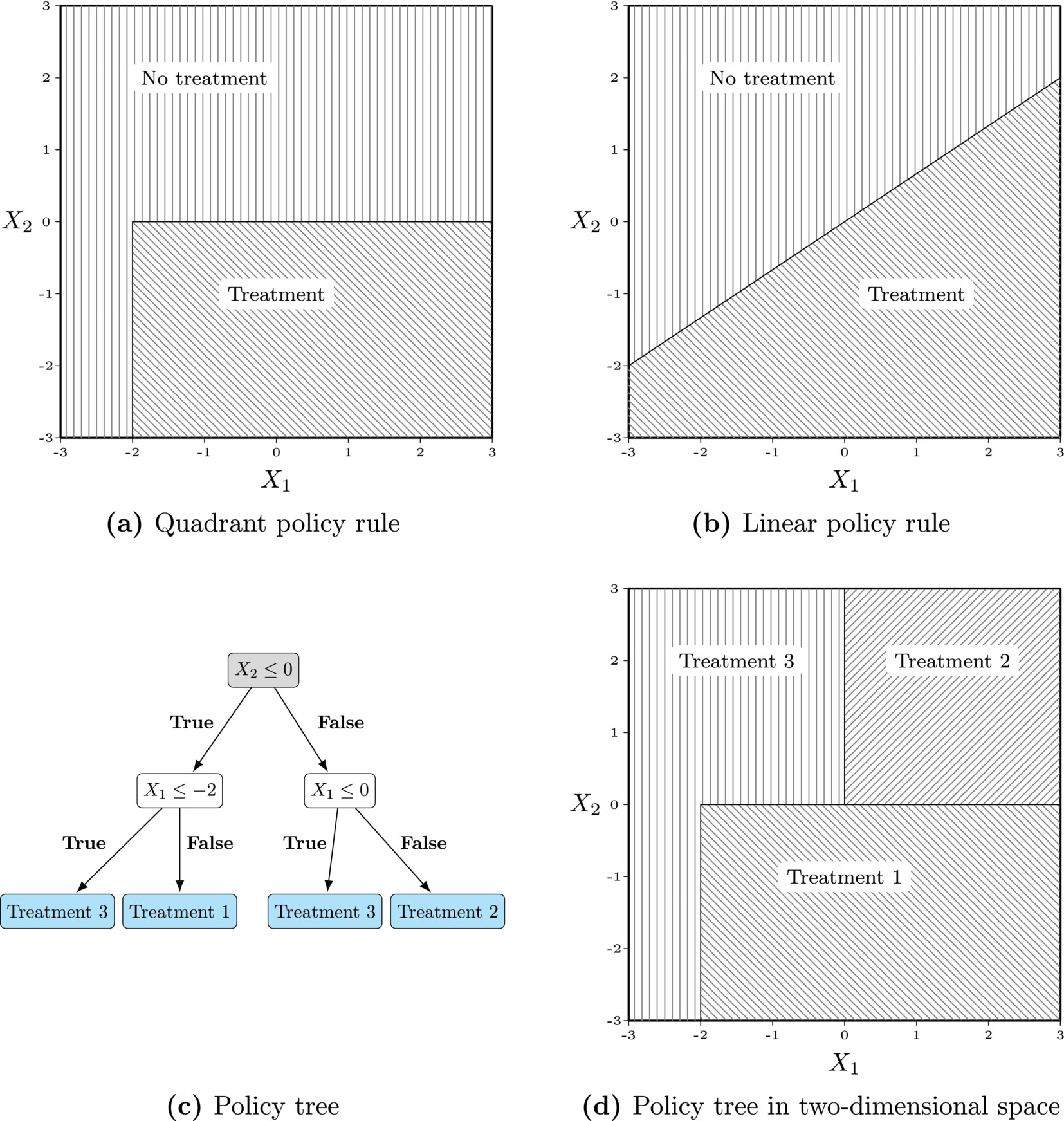
Illustrative examples of policy rules with different functional forms. The figure shows three examples of policy rules that assign treatments based on two covariates. Panels show quadrant policy rule, linear policy rule, and policy tree with three treatment options.
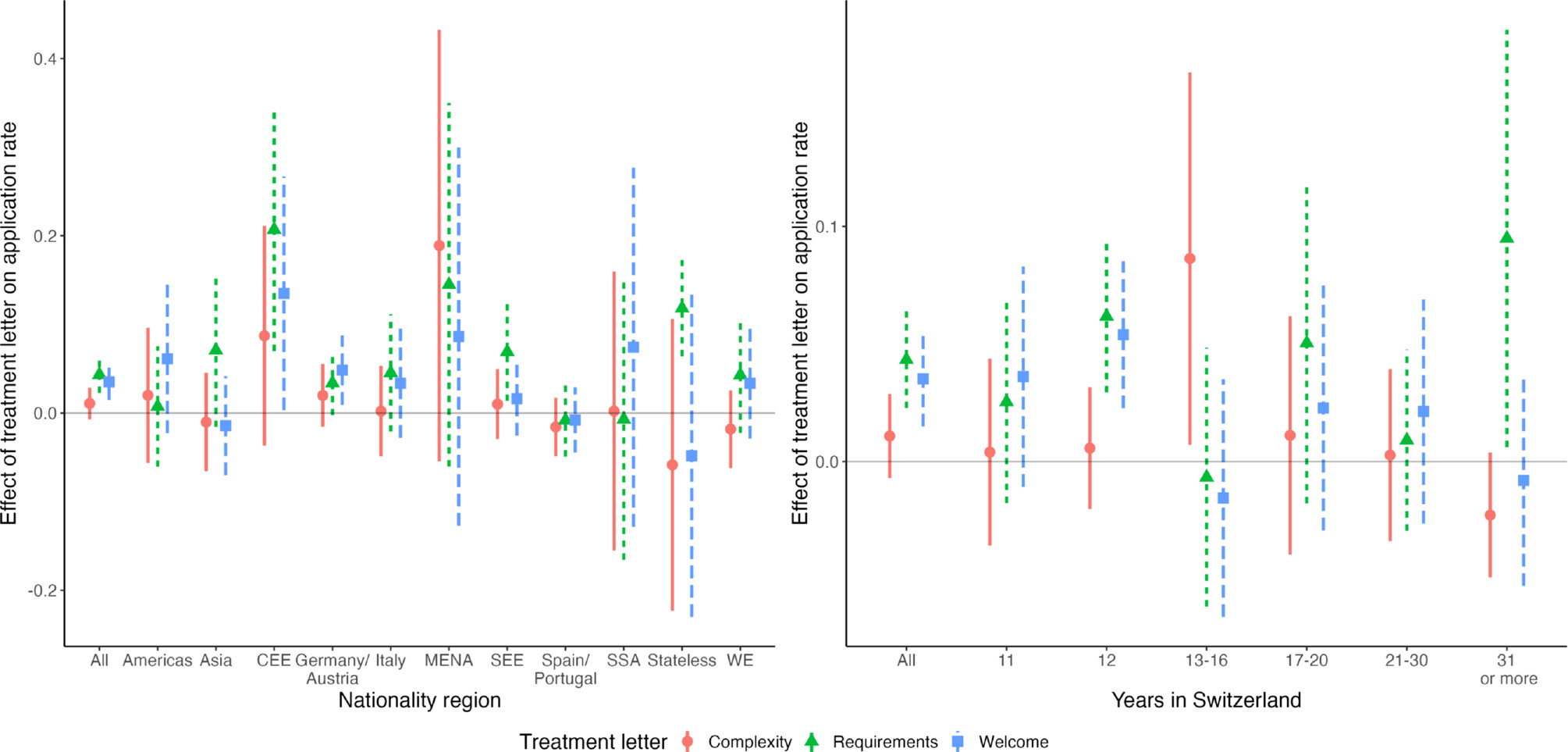
Average and conditional average treatment effects by nationality and years of residence in Switzerland. Treatment effects are estimated using a multi-arm causal forest.
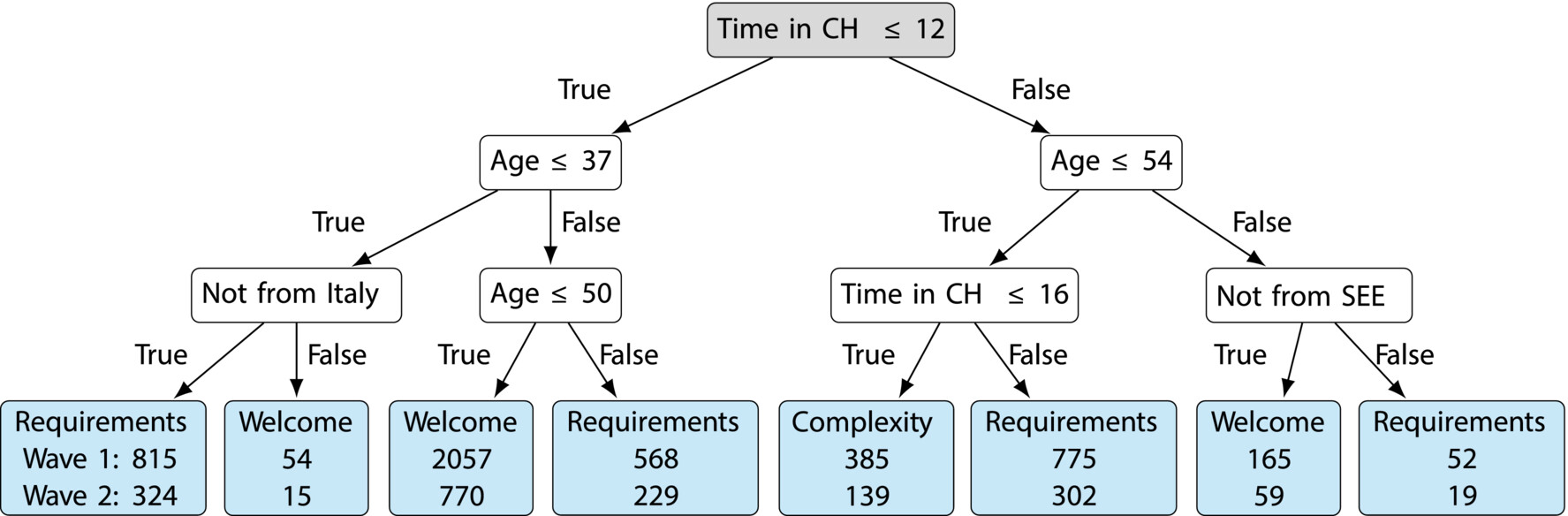
Fitted policy tree. The figure shows the policy tree fitted to data from wave 1. The numbers at the bottom indicate the number of individuals assigned to each terminal node in the training sample and in Group B.
Working Papers
Immigration and Social Distance: Evidence from Newspapers during the Age of Mass Migration
with Gloria Gennaro, Anton Boltachka, Elliott Ash, and Dominik Hangartner
Abstract: A constant of human history is the migration of people in search of a better future. How does the arrival of new immigrants affect the perception of outgroup distance among the native majority group? We provide evidence in the context of the Age of Mass Migration (U.S., 1860-1920). Applying computational linguistics techniques to a newly processed corpus of over 1.8 million newspaper issues (9 million pages) published by 3,675 local outlets in that period, we present and validate a novel text-based measure of perceived social distance between U.S.-born natives and 21 immigrant groups. Using a shift-share instrument for source-specific migrant in-flows, we show that an increase in immigration is associated with higher social distance toward a group, as expressed in local newspapers.
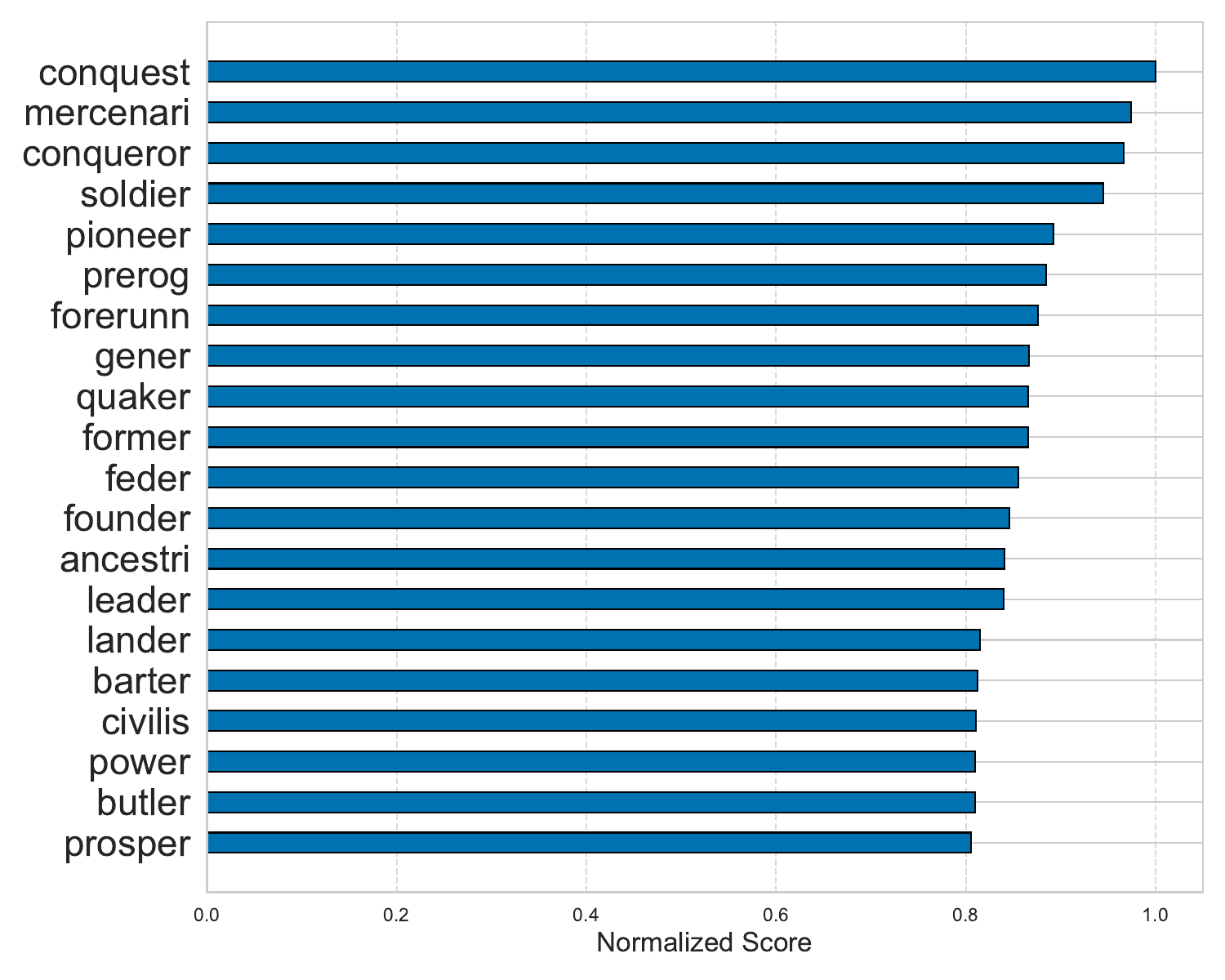
Semantic poles for "Native"
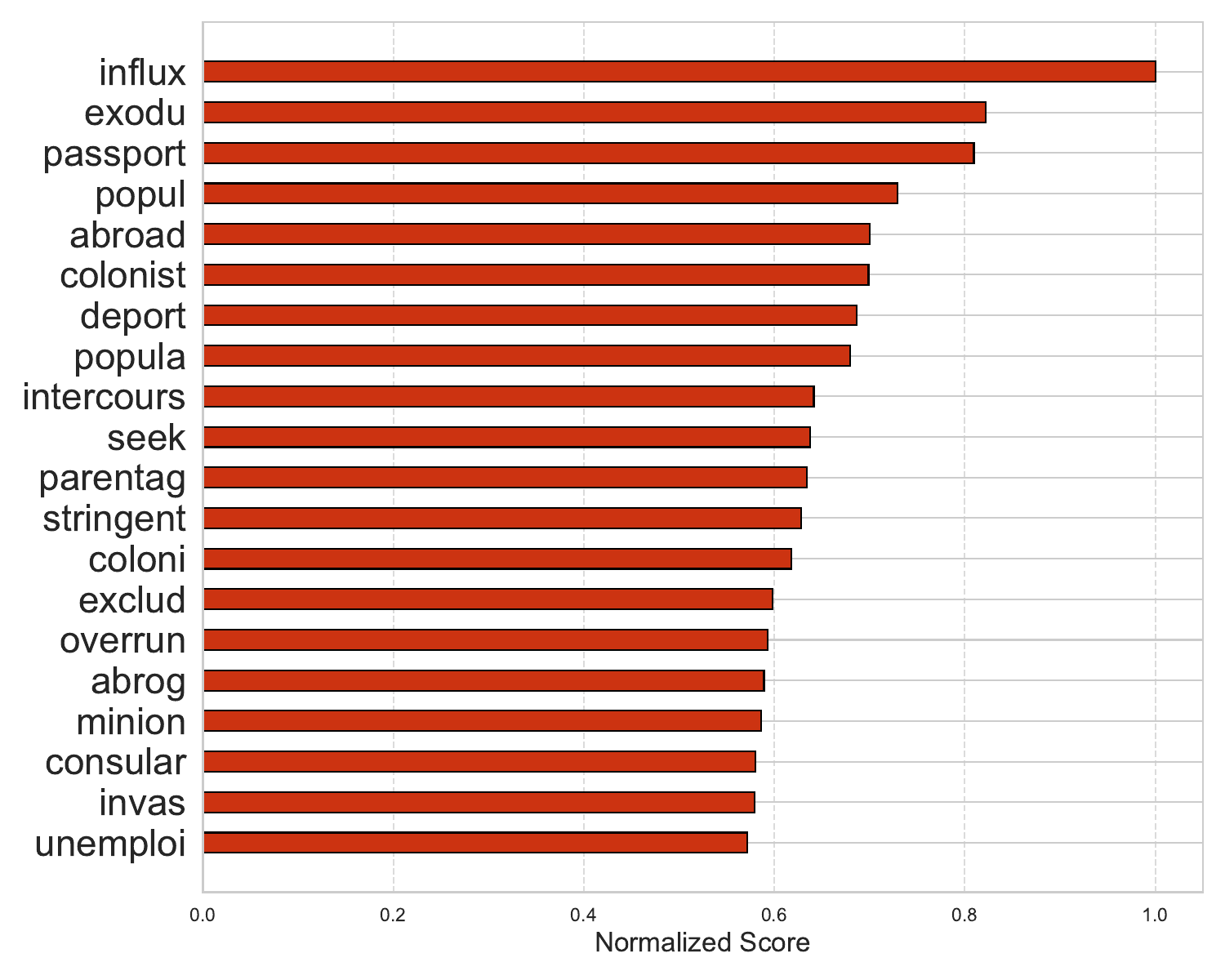
Semantic poles for "Immigrant"
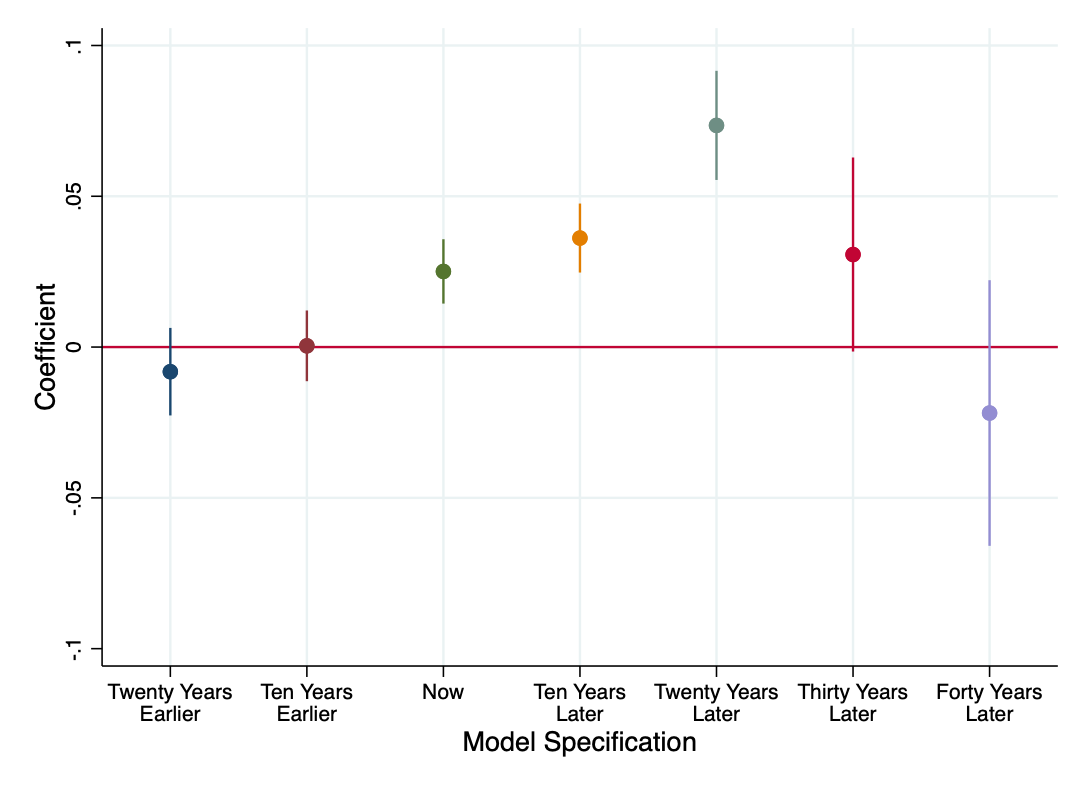
Dynamics of social distance over time
From Formal Eligibility to Political Membership: Information, Welcome, and Immigrant Naturalization
with Dominik Hangartner, Selina Kurer, Joëlle Pianzola, and Dalston Ward
Abstract: A large literature shows that naturalization can generate economic, political, and social gains, yet many immigrants who satisfy formal requirements do not apply. We argue that eligibility alone is insufficient to generate take-up: immigrants may be uncertain that they qualify, doubt that applying is welcome, or view the process as difficult. We test this in two preregistered experiments in Zurich, Switzerland, linking outreach to administrative records and panel surveys. In Study 1, a bundled letter increased applications by 41% (95% CI: 23%, 59%). Study 2 decomposed this intervention: messages targeting eligibility uncertainty and perceived exclusion increased applications by 69% (95% CI: 31%, 106%) and 63% (95% CI: 26%, 100%), respectively, while a message targeting procedural complexity had weaker effects. Survey evidence shows corresponding shifts in eligibility knowledge and perceived inclusion, suggesting that a sense of welcome is not only an outcome of naturalization but also one of its inputs.
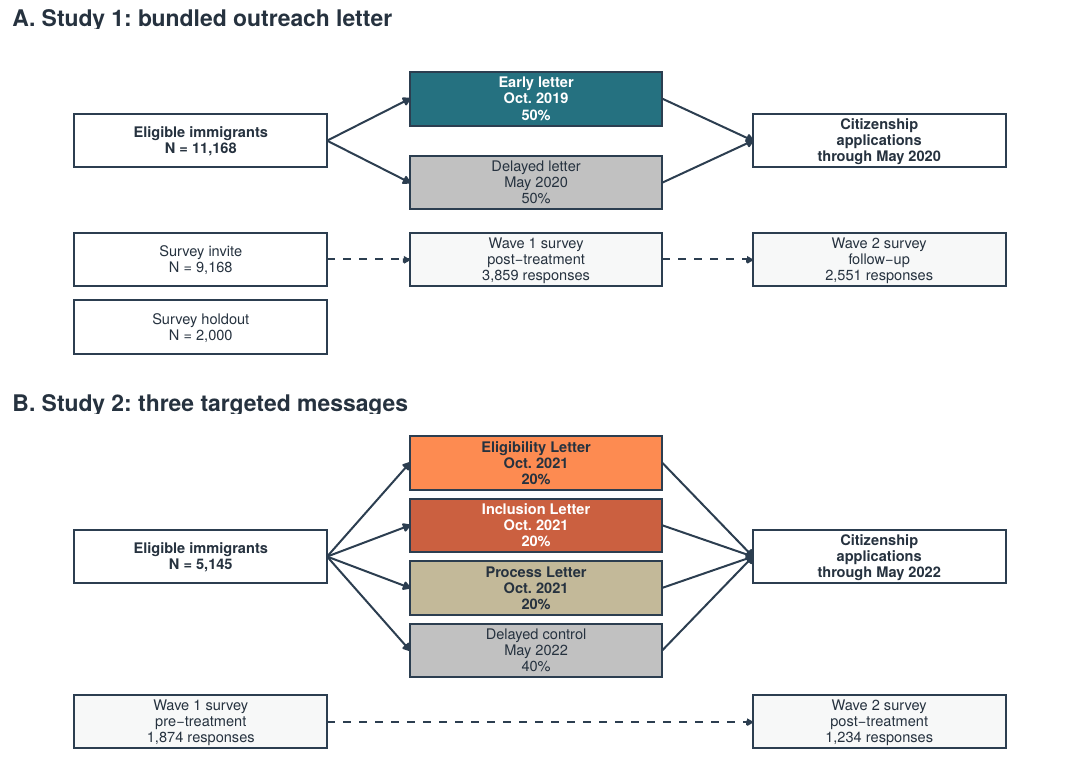
Experimental design and measurement timeline. Panel A summarizes Study 1, which randomized 11,168 newly eligible immigrants. Panel B summarizes Study 2, which randomized 5,145 newly eligible immigrants across three early treatment arms and a delayed control group.
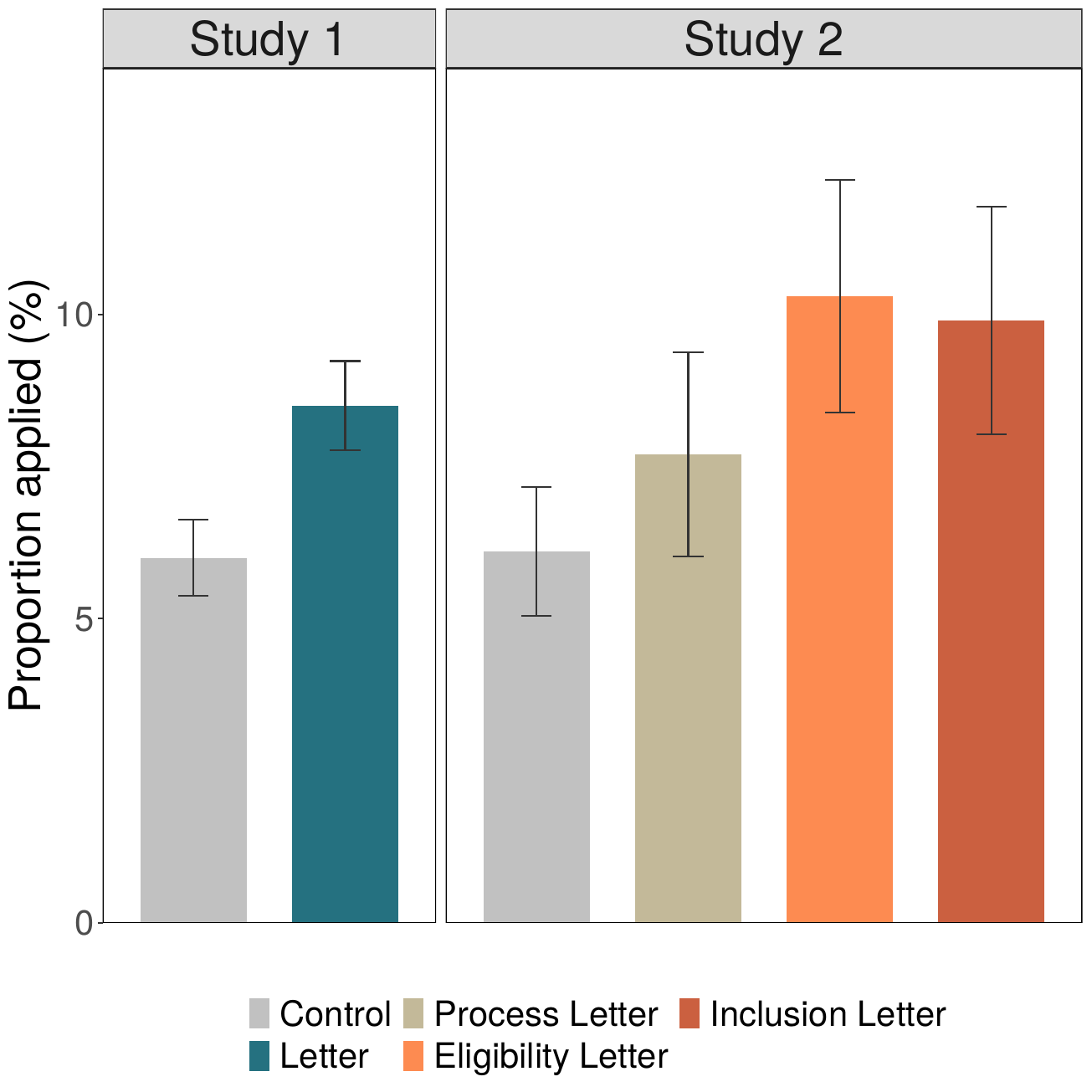
Study 1 and Study 2: effects of the interventions on naturalization application rates. Vertical bars represent the proportion of participants who applied for naturalization within seven months from the start of each experiment, with 95% confidence intervals.
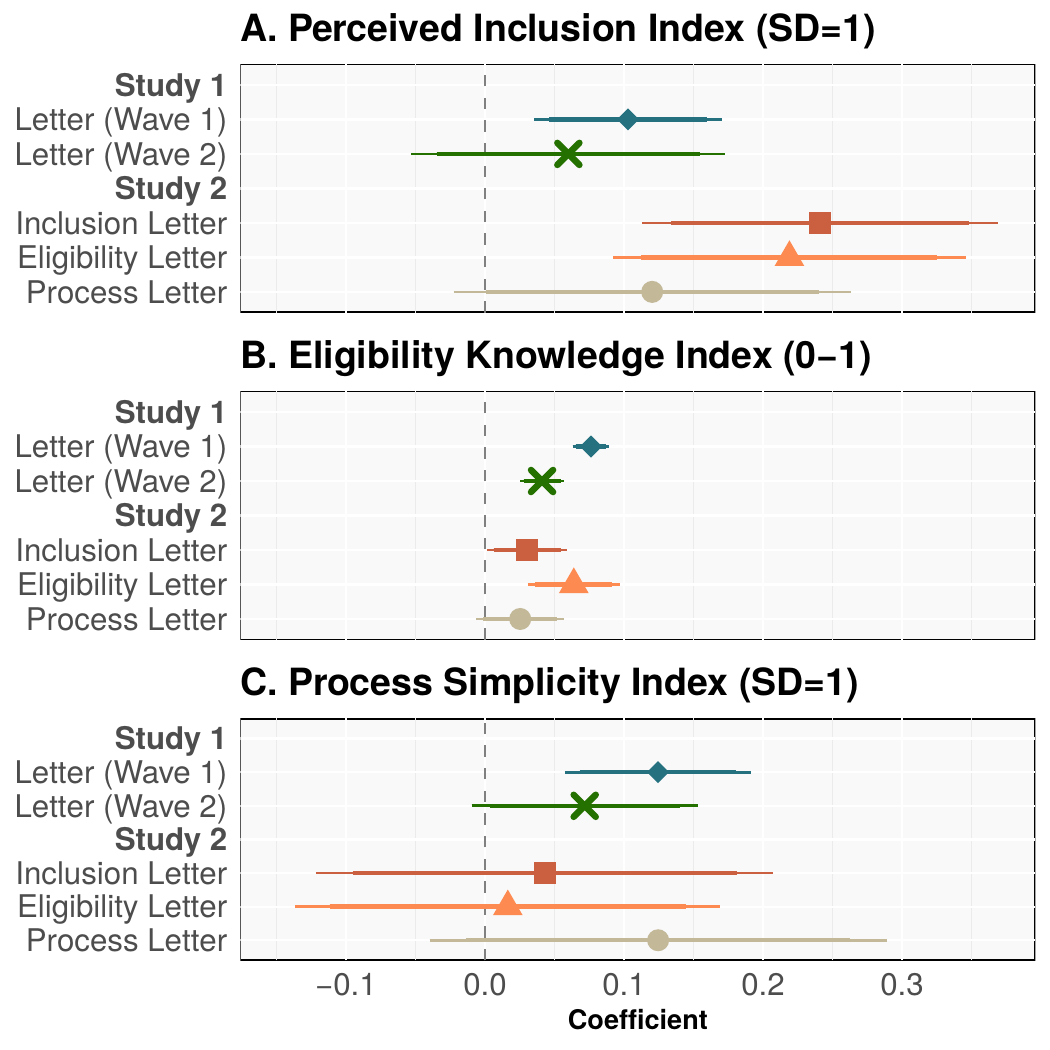
Study 1 and Study 2: effects of the interventions on self-reported naturalization barriers. Outcomes for Study 2 are measured as within-individual change between endline and baseline survey. Horizontal lines represent 90% and 95% confidence intervals.
Work in Progress
Understanding Barriers to Naturalization Among Immigrants: Evidence from a Randomized Field Experiment in Germany
with Giuseppe Pietrantuono and Dominik Hangartner
Abstract: Germany's 2024 reform of the Nationality Act, introducing dual citizenship and shorter residency requirements, triggered a rise in naturalization applications. Yet a large share of eligible immigrants still has not applied, suggesting that barriers beyond legal eligibility persist. We conduct a randomized controlled trial to test whether a targeted intervention can help close this gap. We draw a sample of approximately 170,000 third-country nationals from the Central Register of Foreigners (AZR) who meet the residency requirement for citizenship and had not acquired German citizenship at the time of sampling. Participants who filled in a baseline survey are randomly assigned to a treatment arm or a silent control group. The treatment targets the informational barrier to naturalization through a custom-made, AI-powered RAG chatbot, named "PassBot". PassBot is built to provide interactive, multilingual guidance (German, English, Arabic, Turkish) on the naturalization process, designed to reduce the informational and psychological costs of navigating the application process. Our primary outcome is self-reported naturalization application and citizenship acquisition; we are additionally pursuing access to administrative records from BAMF. To investigate heterogeneous treatment effects, we apply the generic machine learning framework of Chernozhukov et al. (2025) alongside pre-specified subgroup analyses. In December 2026, we will field the follow-up wave of the survey to all respondents, allowing to test the main hypotheses on naturalization uptake and barriers.
Targeted Outreach and Citizenship Take-Up: Experimental Evidence from a Two-Phase Field Experiment in Switzerland
with Michelle Acampora, Selina Kurer, and Dominik Hangartner
Abstract: Against the backdrop of low take-up of public programs and services, governments increasingly personalize outreach to expand access and participation. Yet the barriers to take-up often differ across eligible individuals and are only partly observable to policymakers. We ask whether governments should use administrative data to predict the most effective information for each recipient, or instead offer a structured menu that lets recipients choose the information they need. We study this question in a two-phase field experiment with the City of Zurich involving immigrants who had recently become eligible for Swiss citizenship. Phase 1 randomly assigns 12,699 individuals to one of four barrier-specific leaflet treatments or to a no-outreach control group. The leaflets address process complexity, documentation requirements, institutional support, and the benefits of citizenship. Relative to a 6.9 percent control mean over the roughly six-month outcome window, all four treatments increase naturalization applications by similar magnitudes, with effects of up to 3.6 percentage points. Phase 2 re-randomizes the 3,878 Phase 1 control-group members who had not yet applied to compare two scalable personalization strategies. The data-driven strategy assigns recipients the leaflet predicted to be most effective using machine-learning estimates from Phase 1; the user-driven strategy sends a structured menu that lets recipients access any combination of the four leaflets. Over the five-month outcome window, both strategies significantly increase applications, by 3.2 and 2.6 percentage points, respectively, relative to a 2.9 percent control mean. The 0.6 percentage-point difference between the two strategies is not statistically significant. Over the full 15-month observation window, cumulative application patterns suggest that the treatments generate persistent increases rather than merely accelerate applications. In the user-driven arm, 20 percent of recipients access at least one leaflet; among those who do, 55 percent access more than one. These findings suggest that guided self-selection into information can be an effective alternative to algorithmic targeting when barriers are multidimensional, heterogeneous, partially unobserved, and may evolve over time.
OTHER ACTIVITIES
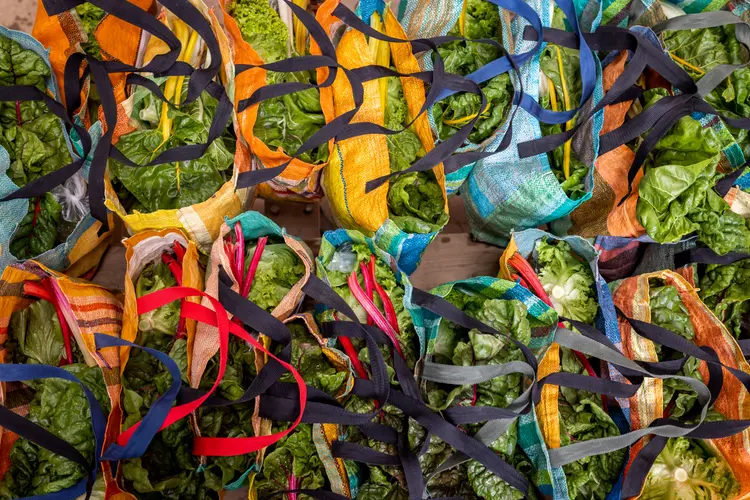
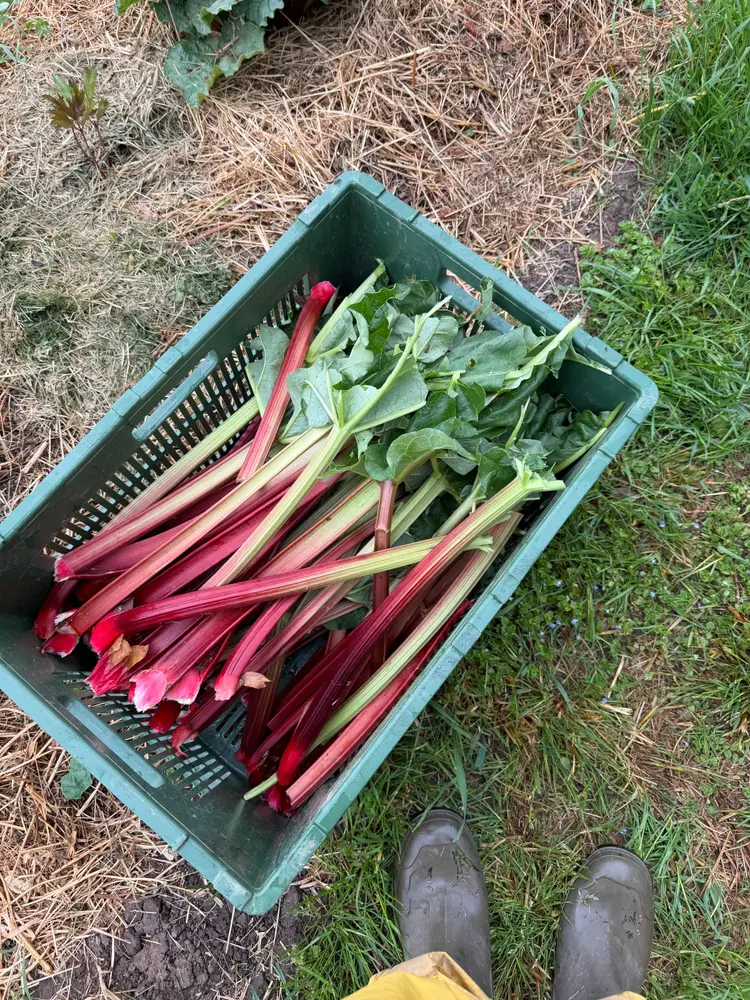
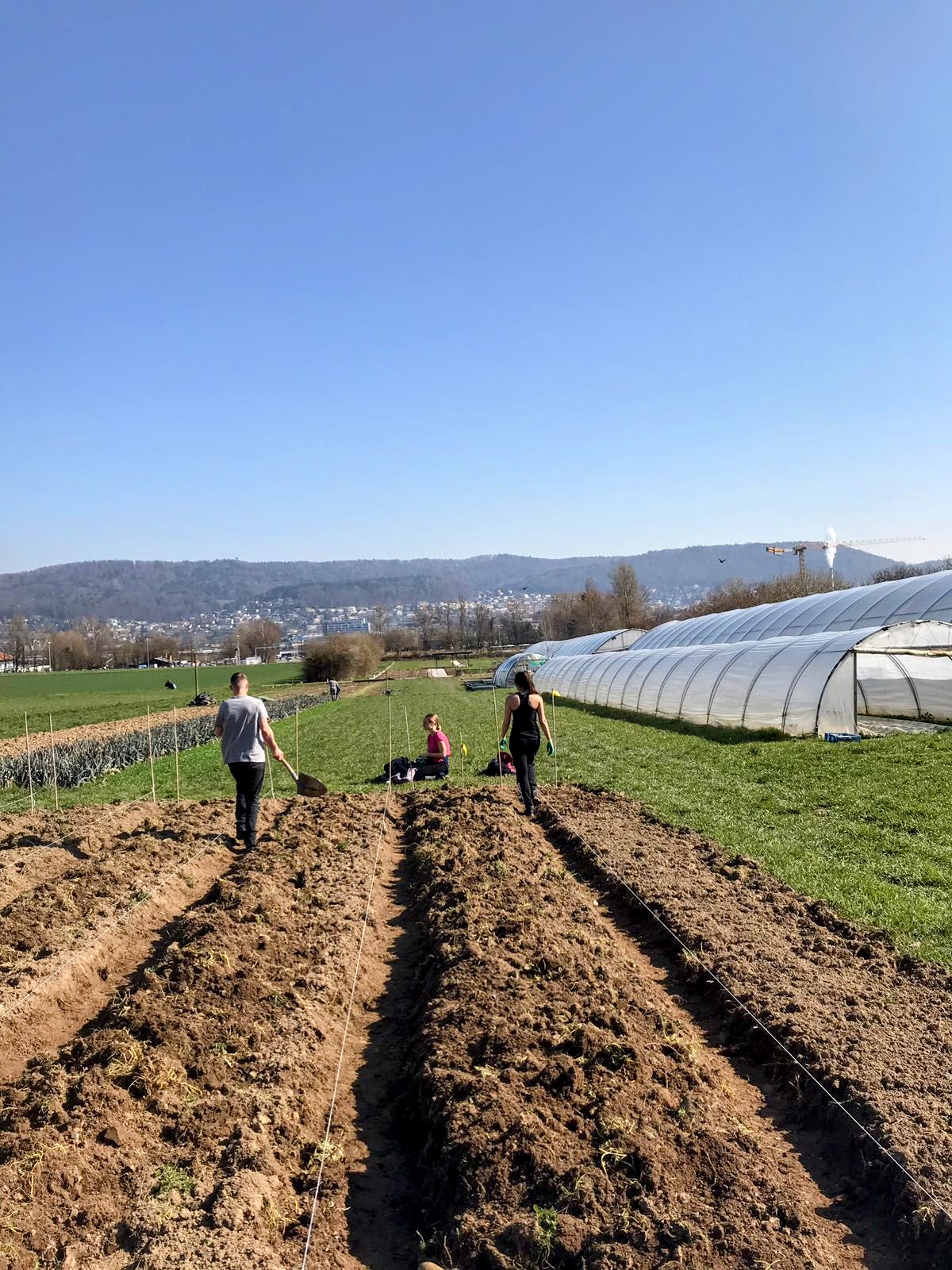
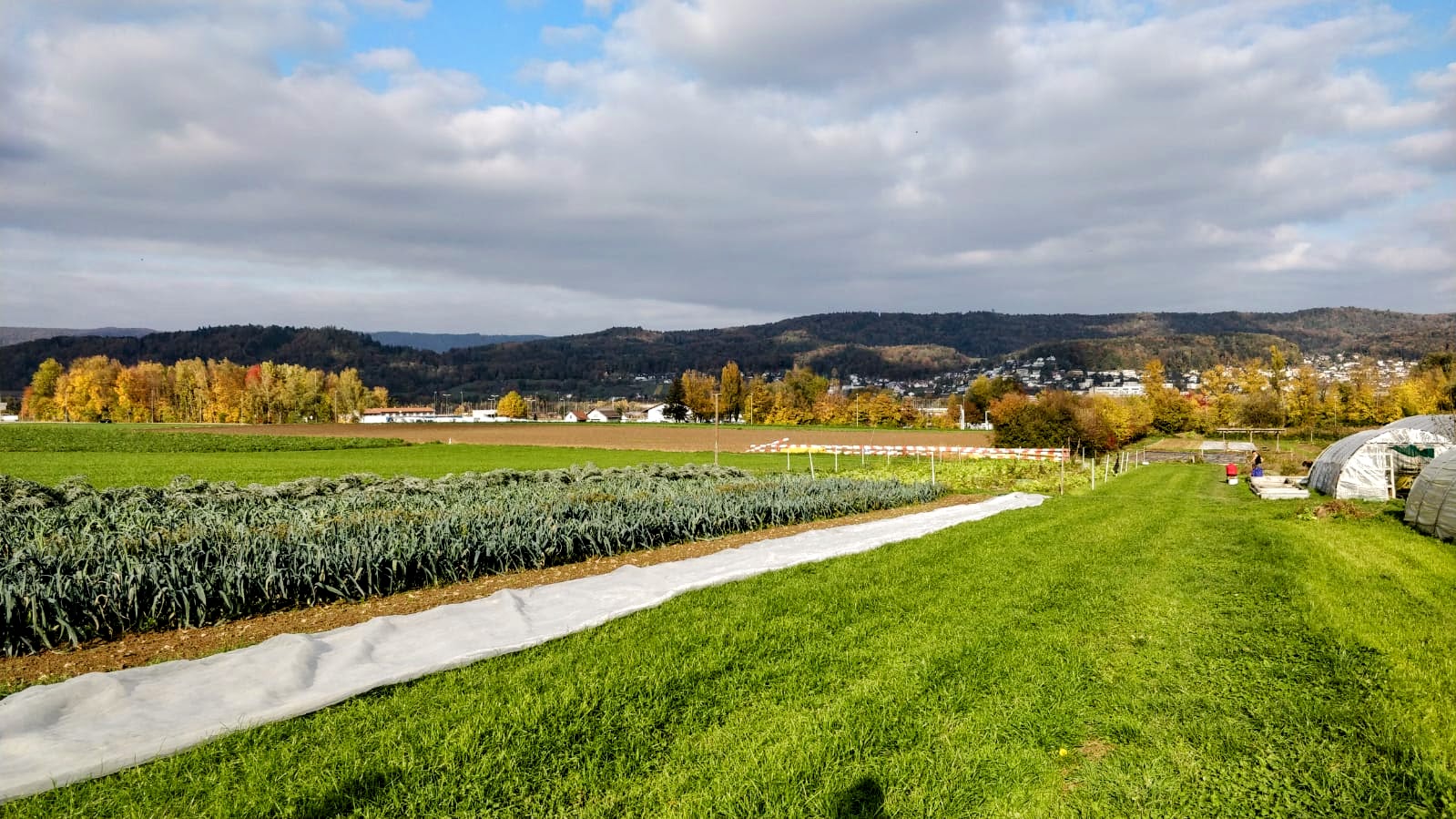
Since 2018, I have been a member of Ortoloco, an agricultural cooperative in Zurich. Working on the farm has rooted me in my local community and deepened my commitment to sustainable food production. This hands-on engagement also reflects values central to my research: belonging, integration, and collective action toward meaningful change.
Beyond the farm, I mentor master and PhD students through the HEC alumni program. Reinvesting in the public education system that supported me throughout my academic career feels meaningful to me. I also pursue creative expression through crafts and music, and for eight years I have been organizing a community football club, open to all.
Photo: Ortoloco
Photo: Ortoloco
CONTACT
Email: alessandra.stampi-bombelli@uzh.ch
Office: AND 5.74, Andreasstrasse 15, 8050 Zurich LinkedIn